
Do You Really Understand the Dates on Food Packaging?


When shopping at a supermarket, many people instinctively check the dates on food packaging before making a purchase.
Some always choose products with the most recent production dates. Others put products back on the shelf as soon as they notice that the expiration date is approaching. Still others believe that as long as a product has not passed its expiration date, it is safe to eat, no matter how long it has been stored.
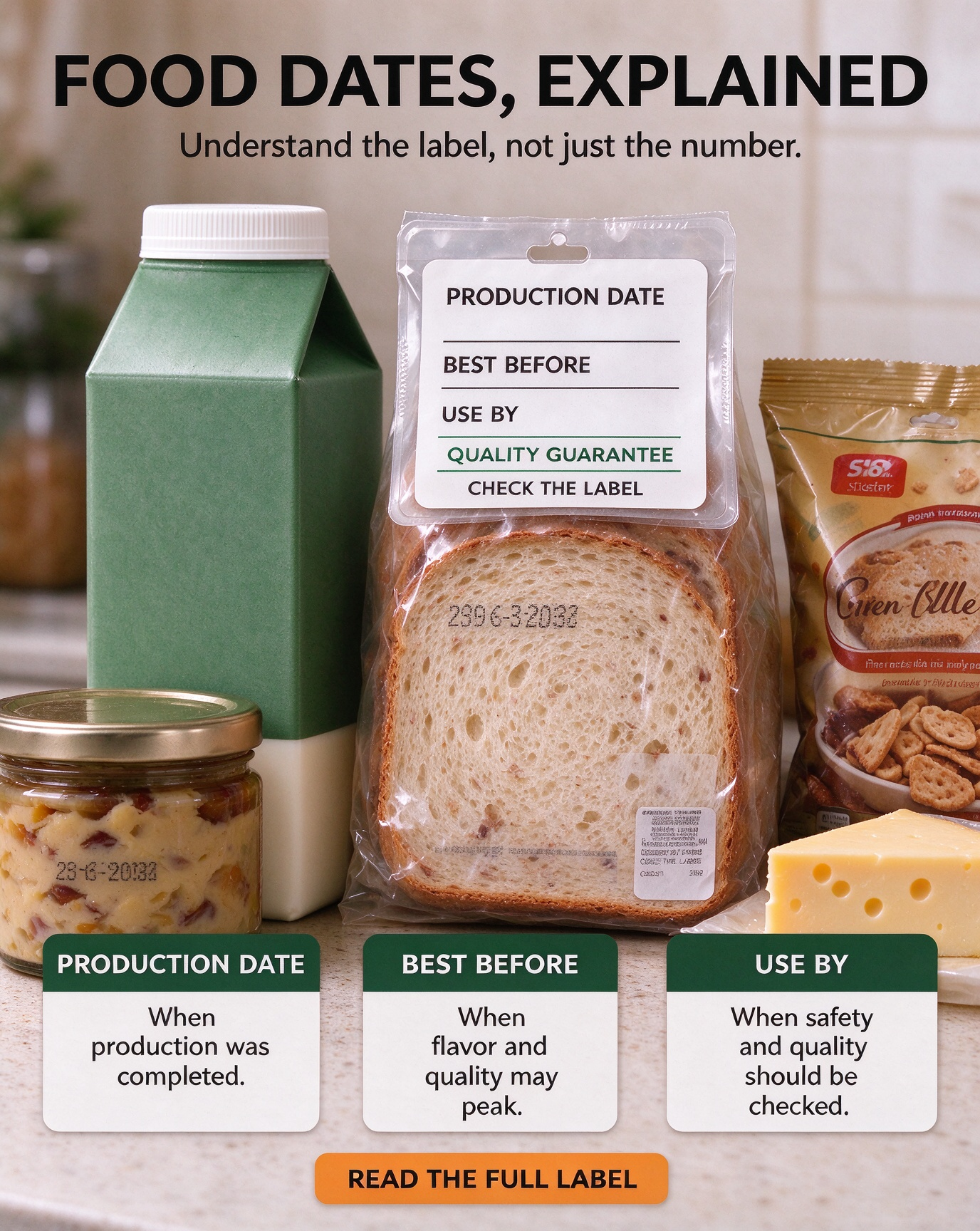
In fact, many consumers do not fully understand several common pieces of information found on food packaging, including the production date, shelf life, storage conditions, and increasingly common labels such as “Best Before” and “Consume Soon After Opening.”
Understanding these labels is not just about enjoying food at its best. It is also essential for food safety.
Production Date: It’s Not Simply a Matter of “The Fresher, the Better”
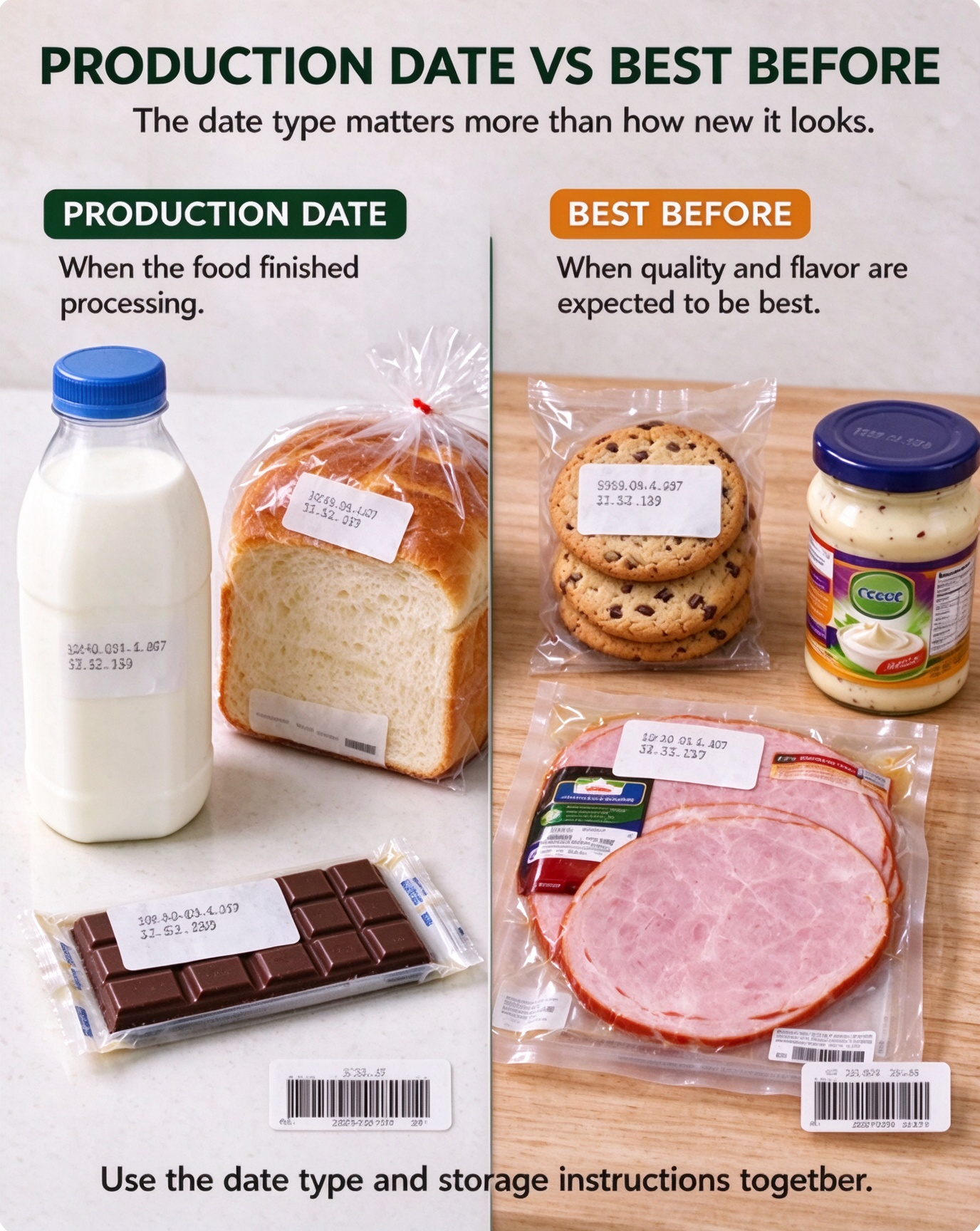
The production date refers to the date on which a food product has completed all manufacturing and processing procedures and is ready for sale.
Many consumers habitually choose products with the most recent production dates. For foods with relatively short shelf lives, such as fresh milk, fresh meat, and bread, this can indeed be beneficial.
However, for certain foods that undergo aging, fermentation, or maturation, such as some cheeses, hams, soy sauces, and vinegars, the production date is not the only factor determining quality.
More importantly, consumers should consider the type of food, its shelf life, and its storage conditions together, rather than simply pursuing the most recent production date.
Shelf Life: It Doesn’t Simply Mean “The Time Before Food Goes Bad”
Many people believe that food becomes inedible as soon as it passes its expiration date, while food that has not yet reached that date must be safe to eat.
In fact, neither assumption is entirely accurate.
According to China’s National Food Safety Standard—General Rules for the Labeling of Prepackaged Foods (GB 7718), shelf life refers to the period during which food maintains its quality under the storage conditions specified on the label. During this period, the food should retain its intended quality and meet food safety requirements.
In other words, shelf life represents not only food safety expectations but also the manufacturer’s commitment to product quality.
If food shows signs of problems before its stated expiration date, such as swollen packaging, leaking or loss of an airtight seal, mold, unusual odors, or abnormal discoloration, it may already have spoiled and should not be consumed.
Conversely, even if a food product has only just passed its expiration date and shows no obvious visible changes, you cannot reliably determine whether it is still safe to eat based on appearance or personal experience alone. Microbiological risks may already be present but invisible to the naked eye.
What Does the Increasingly Common Label “Best Before” Mean?
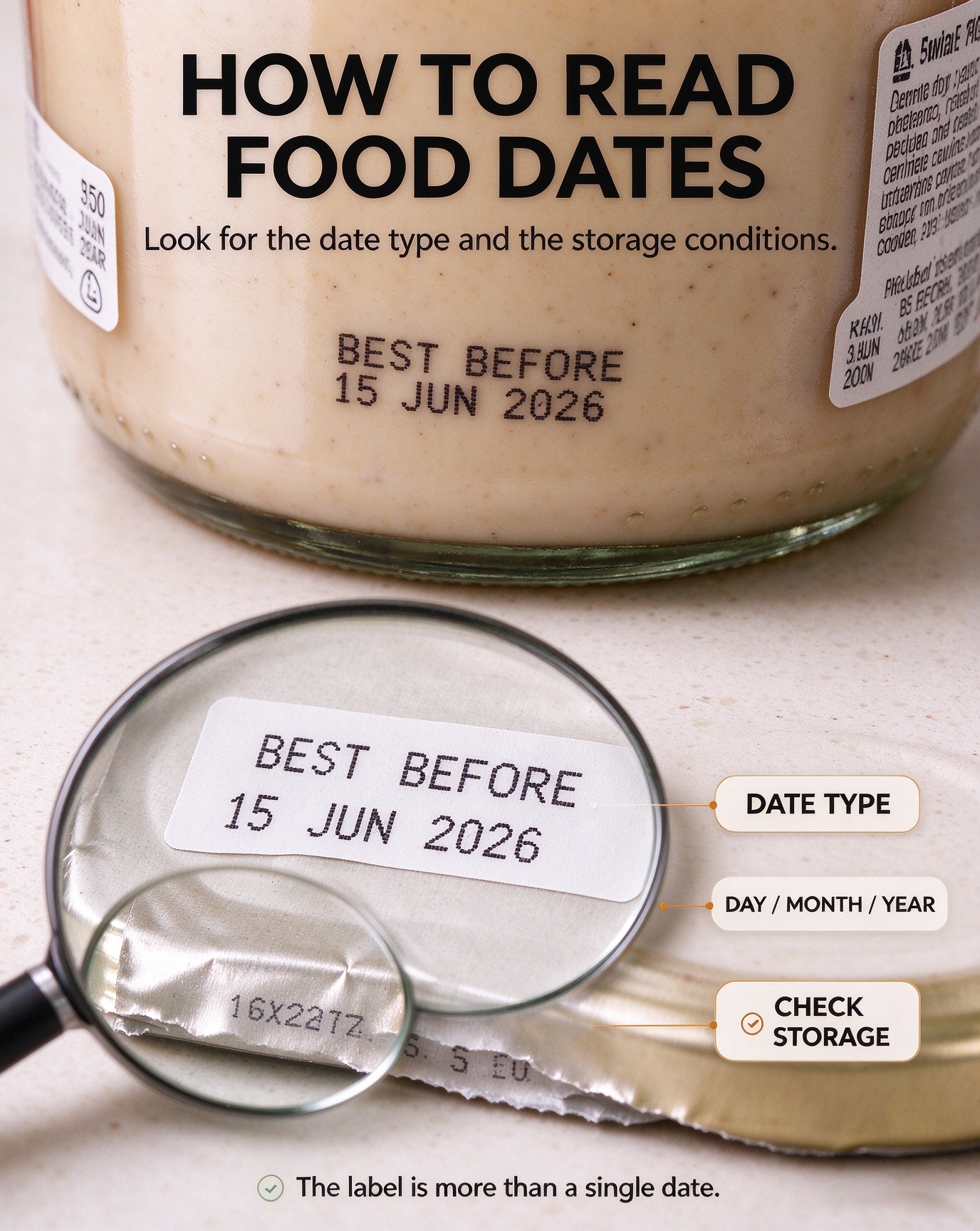
In recent years, labels such as “Best Before” and “Best Before Date” have appeared on many imported foods and products such as coffee, chocolate, biscuits, and nuts.
These labels do not mean exactly the same thing as an expiration date or shelf life.
A “Best Before” date primarily indicates the period during which a food product is expected to retain its optimal flavor, texture, and overall quality. After this date, the food may lose some of its aroma, develop changes in texture, or show color changes, but this does not necessarily mean that it has spoiled.
However, whether the food can still be consumed should be assessed by considering how it has been stored, whether the packaging remains intact, and the information provided by the manufacturer.
Storage Conditions: Often the Most Overlooked Factor
Many food packages carry instructions such as “Store in a cool, dry place,” “Keep refrigerated,” or “Keep frozen.”
Yet many consumers focus only on the dates and overlook these instructions.
In fact, the stated shelf life is based on the assumption that the food is stored according to the conditions specified on the label.
For example, yogurt that requires refrigeration may spoil prematurely if left at room temperature for an extended period, even if its expiration date has not yet arrived. Foods that require freezing may also pose increased food safety risks if they are repeatedly thawed and refrozen.
Therefore, proper storage is an essential part of maintaining food quality and safety.
Consumption Period After Opening: Another Important Detail to Check
Many food packages include instructions such as:
“Consume soon after opening.”
“Refrigerate after opening and consume within 3 days.”
“Best consumed within 24 hours of opening.”
These instructions are not just there for decoration.
Once a food package is opened, the contents are exposed to air, moisture, and microorganisms in the surrounding environment. Even if the package is resealed afterward, the food cannot return to the same condition it was in before opening.
Every label on food packaging conveys important information from the manufacturer to the consumer. These labels are much more than just numbers and words.
Learning to interpret them correctly helps us make more informed purchasing decisions and enjoy our food with greater confidence and peace of mind.